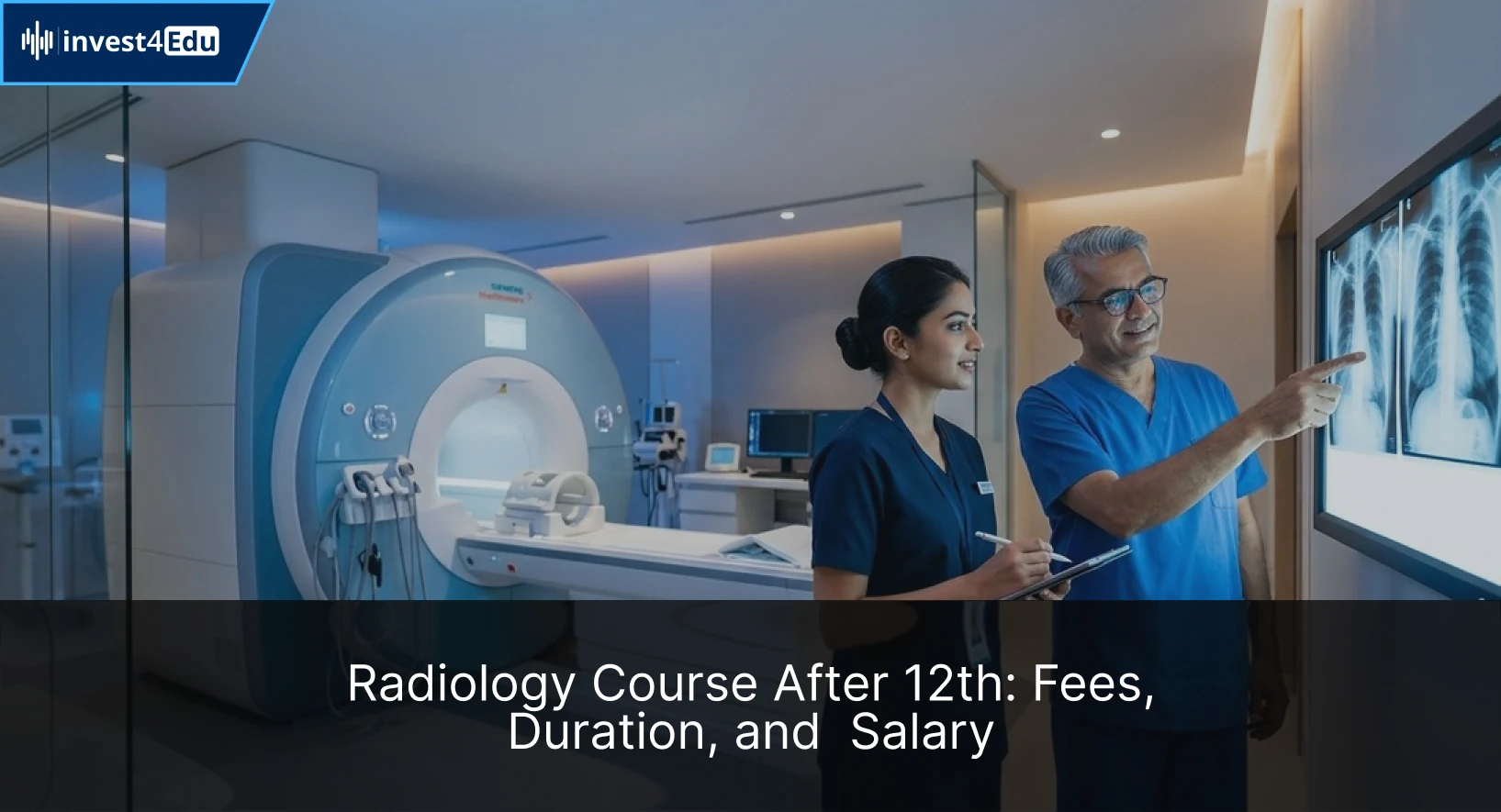





Radiology Course After 12th: Fees, Duration, and Salary
8th November is World Radiography Day. This day commemorates Wilhelm Röntgen discovering x-rays in 1895. Every scan, whether it be for a broken wrist or an early diagnosis of cancer, can be traced back to this day. Behind every image there is an expert who has received training to do this job, but you may never actually meet them. This article helps all class 12 Science students who want to pursue a career in Radiology. We will explain what radiology is, courses available to you, and how much they will cost. We will also look at how long they last and what salary Radiologists and Radiographers can expect in India.
Radiology Course After 12th – Quick Info
Most Popular Radio Course: BSc Radiology/Radiology & Imaging Technology (BSc RIT/MRIT)
Course Duration: 3 Years + 1 Year Internship = Total course duration of approx 4 years. Diplomas can take 1-3 years and Certificates approx 6 months.
Eligibility: 10+2 with Physics, Chemistry & Biology (Minimum 50% Marks).
Cost: Approx ₹15,000 – ₹1 Lakh per year for Government Institutes.Salary: Freshers earn around ₹1.5-3.5 Lakh per year. Radiologists (Doctors) earn much more, but they have to do their MBBS & MD first.
These costs and salaries are all approximate and will vary depending on the college, city and employer. Be sure to check official websites of the institutions.
What is Radiology? Meaning and Scope
Radiology is the branch of medicine that uses various imaging techniques including x-rays, Computed Tomography (CT), Magnetic Resonance Imaging (MRI) and ultrasound to visualise the internal structures of the human body.
Radiology can be divided into two main parts:
1. Radiology Technologist – Imaging Specialist
- Study Duration: 2–4 years (B.Sc. / Diploma)
- Operates X-ray, CT, MRI and other imaging equipment.
- Positions and prepares patients for scans.
- Ensures safe use of radiation during imaging.
2. Radiologist – Medical Doctor
- Study Duration: 8+ years (MBBS + MD)
- Examines and interprets medical images.
- Identifies diseases and helps determine diagnoses.
- Performs specialised image-guided procedures.
What's the difference between a Radiologist, Radiographer, Technologist and Radiology Assistant?
Often students will ask Who a Radiologist are? This can be confusing as they have similar names. They require different qualifications and have very different roles and salaries.
Role | Who they are | Qualification |
| Radiologist | A medical doctor who interprets scans and writes the diagnostic report | MBBS + MD/DNB in Radiodiagnosis |
| Radiographer / Radiologic Technologist | Operate imaging equipment. Prepare patients. Ensure high quality imaging and safe from radiation. | BSc Radiology/RIT or Diploma |
| CT / MRI Technologist | Specialises in one modality | BSc RIT plus modality training |
| Radiology Assistant | A support role. In India, it generally means an entry-level assistant to radiographers and radiologists. In the US, "Radiologist Assistant" is a separate advanced-practice credential that needs further graduate study. | Certificate, diploma or BSc (India) |
Key point: Yes, you will need an MBBS in order to become a Radiologist. In India, you must clear NEET UG. You cannot become a radiologist through a BSc. A BSc makes you a radiographer or imaging technologist, which is a skilled and respected career in its own way.
Key Radiology Courses After 12th: Overview
Students can study certificate, diploma or degree courses in Medical Imaging after completing their class 12 with science subjects (Physics, Chemistry and Biology/Maths).
Course | Duration | Approx. fees | Eligibility |
| Certificate in Radiography Technology | About 6 months | About ₹1,000–₹30,000 (varies widely) | 10+2, usually with Science (PCB); requirements vary by institute |
| Diploma in Radiology / Radiography (DMRIT) | 1–3 years | About ₹1–2 lakh (total) | 10+2 with Physics, Chemistry and Biology; minimum marks set by the institute |
| BSc Radiology / Radiology & Imaging Technology | 3 years + 1-year internship | About ₹15,000–₹2.5 lakh per year | 10+2 with PCB, generally 50% minimum (relaxation for reserved categories); merit or university entrance test |
| BSc Radiotherapy Technology | 3–4 years | Varies by institution | 10+2 with PCB, generally 50% minimum; merit or entrance based |
| MBBS → MD Radiodiagnosis | 5.5 years + 3 years | Varies; far lower in government colleges | 10+2 with PCB and English, qualify NEET UG for MBBS, then NEET PG for MD/DNB; marks and age rules as per NMC |
BSc Radiology (BSc RIT) in Detail
Eligibility
- Pass 10+2 with Physics, Chemistry and Biology from a recognised board with a minimum of 50% (Some colleges require students to have 45% for Reserved categories).
- You can gain admission based on merit or entrance exams.
- Human Anatomy and Physiology
- Physics of Radiation and Radiation Safety (ALARA - As Low As Reasonably Achievable)
What You Will Study
- Human anatomy and physiology
- Radiation physics and radiation safety (the ALARA principle: keeping exposure "as low as reasonably achievable")
- Radiographic positioning and techniques
- CT, MRI and ultrasound technology
- Patient care, first aid and imaging pathology
- Clinical postings and a compulsory internship in a hospital
India is moving to a standard curriculum for these programmes. The Health Ministry and the National Commission for Allied and Healthcare Professions (NCAHP) have developed competency based curricula for 10 allied health professions such as Radiology and Imaging Technology.
Why It's a Smart Choice
- You enter the workforce within about four years.
- Cost is far lower than a medical degree.
- Hospitals, diagnostic chains and imaging centres recruit throughout the year.
- Progression to MSc and MBA in healthcare management or specialisation in MRI, CT or Nuclear Medicine is possible.
Radiology Course Fees in India
Fees depend mostly on whether the college is government or private, and on the city.
- Government/state university colleges – Least expensive (around ₹1 lakh) though limited availability and very competitive.
- Private colleges/deemed universities – Commonly priced between ₹80,000 to ₹2.5 Lakh depending on the type.
- BSc (4 years + internship) – Around ₹1.5 lakh to ₹10 lakh depending on the college.
- Total for BSc (4 years with internship): roughly ₹1.5 lakh to ₹10 lakh depending on the college.
- Extra costs to consider – Hostel fees, uniforms, lead aprons, travelling during your internship, exam fees and a laptop.
When planning to study further you can use tools such as invest4edu Edu Cost Calculator to see how much your academic costs in the future, help to understand the inflation and plan how much to save towards your target effectively.
How to Become a Radiologist (The Doctor Route)
- Class 12 with PCB.
- NEET UG to get into MBBS.
- MBBS: 4.5 Years + 1 Year Internship.
- NEET PG : National PG entrance exam at present to get into MD/ DNB Radiodiagnosis for 3 Years
- Super Specialisation (optional): DM or Fellowship in fields like Neuroradiology, Interventional Radiology etc.
Medical standards are set by the National Medical Commission. Check the current criteria and counselling guidelines every year as they change every year.
Career Options After a Radiology Course
A radiology course will open various career opportunities for you. You can work in diagnostic centres, research organisations and multi-speciality hospitals.
- Radiographer/X-Ray Technician
- CT scan technologist and MRI technologist
- Ultrasound and mammography technologist
- Cath lab technologist
- Radiotherapy technologist
- Radiology assistant
- PACS administrator or imaging informatics specialist
- Applications specialist at medical equipment companies
- Lecturer or clinical instructor (after MSc)
Radiologist Salary in India
Salary data on the internet varies a lot, so this section uses ranges from published salary platforms rather than a single headline number.
Radiographer / Technologist (After BSc or Diploma)
Source | What it reports |
| Payscale (2026) | Approximately ₹2.5 LPA as a Base Salary. |
| AmbitionBox | Radiographer technologists reported at roughly ₹0.2–7 lakh per year, depending on city and employer |
Realistic expectation: A realistic base salary you can expect is approximately ₹ 1.5-3.5 LPA in the beginning, however with more experience you could earn up to ₹ 4-7 LPA. This would also depend on whether you have specialisations such as CT/MRI or if you are working in a metro hospital. Higher paying technicians often work in top corporate hospitals or Government jobs such as AIIMS.
Radiologist Salary (After MBBS + MD)
The salary after becoming a doctor is much higher. According to 2026 salary guidelines by 5C Network, public surveys reported early career Radiologists earn around ₹9-12 Lakh annually, while experienced consultants earn around ₹15-25 Lakh. Sub-specialists earn even more, at ₹30 Lakh or more in tier-1 cities. AmbitionBox has a higher range of salaries (around ₹1-50 Lakh), because it includes trainees, part timers and private practice.
What Pushes Salary Up
- Specialisation (MRI, CT, interventional radiology, nuclear medicine)
- City and employer type (metro corporate hospitals pay more)
- Postgraduate degree (MSc or MD)
- Experience and reporting volume
- Teleradiology or international opportunities
Higher Studies After BSc Radiology
- MSc Radiology & Imaging Technology / Medical Imaging Technology
- MSc Medical Physics (important in radiotherapy)
- MBA / PG Diploma in Hospital Administration
- Fellowship and short courses in MRI/CT/Doppler.
- Study abroad opportunities in medical imaging. This varies between countries in terms of licensing and recognition. invest4Edu can provide study abroad guidance on this.
Is Radiology Still a Good Career with AI?
AI tools are increasingly being used to highlight abnormal scans and streamline reporting. However, they will not replace the need for someone to place the patient, ensure safe operation of the machine and keep radiation exposure to a minimum. Also, there will be continued demand for trained imaging technologists who are able to work with AI tools as imaging increases. It is a trend but continuing to upskill will be important.
How to Choose the Right Radiology College
Choosing the right college for Radiology:
- Recognition: Ensure that your course is recognised and follows the NCAHP guidelines by being approved by either the appropriate University or State authority. The Atomic Energy Regulatory Board (AERB) maintains a list of recognised diagnostic radiology courses and enforces safe use of radiation for X-ray practice in India.
- Equipment and labs: Ask if they have real X-ray, CT and MRI units to train students on.
- Hospital tie-up: If the college has a Teaching Hospital then clinical training will be much better.
- Internship and placement record: Ask for real statistics about their internship and placements.
- Total cost: Get a written fee breakup for all years.
As the NCAHP are creating a national register of allied and healthcare professionals it is becoming more important to register upon graduation.
Final Thoughts
Radiology is one of the few areas within health care that combines technology, caring and innovation. Depending on what interests you, your budget and time frame you can choose to become a technologist working in MRI suites or a radiologist interpreting scans. Make sure to research your colleges well to ensure they are recognised and think about the costs involved.
Ready to plan your education journey? invest4Edu can help you choose the right college and plan the cost. Talk to our experts today.