Dr. APJ Abdul Kalam: A Tribute on His 11th Death Anniversary
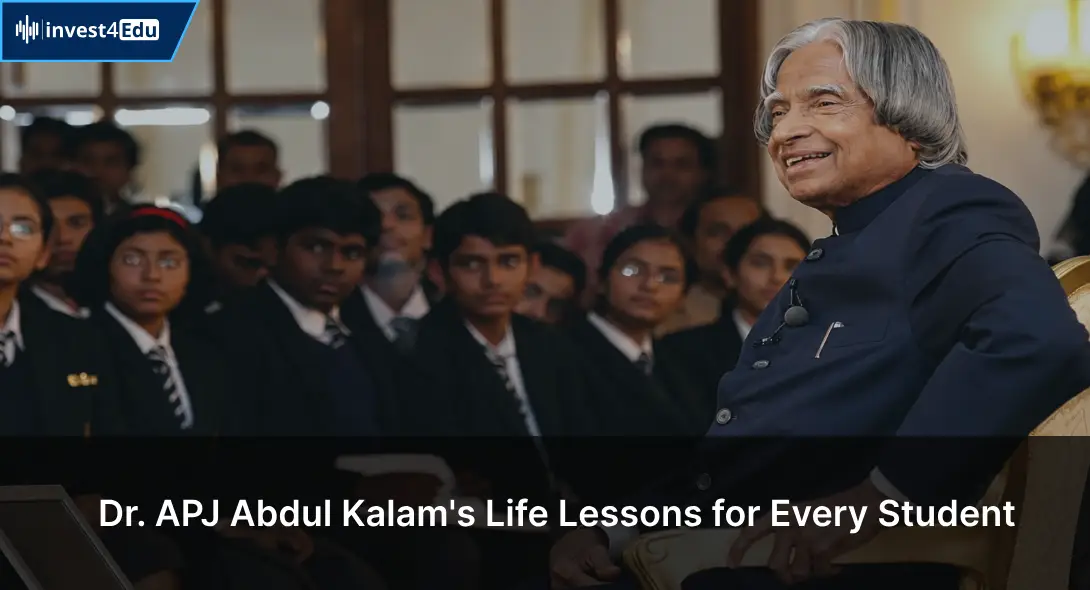





He wanted to fly fighter planes—badly. It was not a passing interest, but the kind of dream a young man can carry with everything he has. Kalam called it his “dearest dream.”
At the Indian Air Force selection in Dehradun, 25 candidates competed for eight pilot positions. Kalam finished ninth. One rank away from the life he had planned.In his autobiography, Wings of Fire, Kalam recalled the advice Swami Sivananda gave him after the rejection. Sivananda’s message was not sympathy—it was redirection. As Kalam recorded it, he told him plainly, “You are not destined to become an Air Force pilot.” What Kalam was meant to become had not yet been revealed, but Sivananda urged him to accept the failure and see it as a necessary step towards his true path.
Kalam returned to Delhi and received an appointment as a Senior Scientific Assistant. That role placed him on a path that eventually led through DRDO, ISRO and India’s missile programmes, earning him the name “Missile Man of India.” Years later, he became President of the same country whose Air Force had selected eight candidates when he had ranked ninth.
Why July 27 Matters
Dr. APJ Abdul Kalam's death anniversary is observed every year on July 27 — the anniversary of his death in 2015, when he collapsed while lecturing students at IIM Shillong, doing until his final moments the thing he loved most: talking to young people about what was possible. Most tributes on this day reach for his best-known line about dreaming big. It's a good line. It's also the version of his story that skips the part that actually explains his career.
The fighter pilot rejection isn't a footnote before the "real" story starts. It's the hinge the whole thing turns on. Without it, there's no DRDO posting, no ISRO years, no satellite launch vehicle, no Missile Man, no President. The plan that failed is the reason the actual career happened.
The Part That Gets Left Out
Here's what's easy to miss when a life gets compressed into an inspirational quote: Kalam wasn't naturally resilient in some effortless, born-that-way sense. He described genuine despair in that moment. The redirection wasn't instant, and it wasn't painless. It took someone else's words to pull him back toward motion instead of staying stuck in what he'd lost.
That matters because most families don't talk about the version of a career story that includes the rejection. They talk about the outcome. A child who doesn't get into their first-choice engineering college, who misses a NEET cutoff by a handful of marks, who doesn't make the cut for a stream they'd set their heart on — that child needs to hear the part where Kalam nearly gave up, not just the part where he became President. The despair was real. So was what came after it.
There's a second thread in his life worth pulling on, too, and it rarely makes the highlight reel: Kalam grew up in real financial hardship, the son of a boat owner with a modest income, and he sold newspapers as a boy to help support the household while he studied. The dream needed more than ambition to survive. It needed someone making deliberate decisions about how the education behind it actually got paid for. Dreaming big and planning carefully were never in competition in his story — they were the same project, running side by side.
What This Actually Means for a Family Planning a Career Today
Somewhere along the way, "planning" got framed as the boring opposite of "dreaming." The plan is the spreadsheet. Dream is the fire. Kalam's actual life argues otherwise — the plan wasn't what killed his dream; it was what carried the dream somewhere else once the first route closed.
For a parent sitting with a child after a disappointing exam result, or a stream that didn't work out, or a college rejection, the useful question isn't "how do we prevent this from ever happening again?" Some rejection along the way is close to guaranteed over a long enough career. One exam, one cutoff, one selection panel isn't going to get everything right — and neither is a seventeen-year-old choosing a stream under pressure. The more useful question is: does this child have a version of DRDO waiting on the other side of the door that just closed?
This isn't a pattern unique to 1957. It plays out every exam season. A student who narrowly misses a NEET cutoff and has never seriously considered anything else, can spend a year stuck repeating the same exam and hoping for a different outcome. A student in the same position who'd already been exposed to biotechnology, clinical research, or public health fields close to medicine but not identical to it often ends up building a career that fits them just as well, sometimes better than the one they'd originally set their heart on.
That's what real planning is actually for. Not preventing every rejection — nobody can promise that — but making sure a single closed door doesn't take the whole future down with it. A child who's only ever considered one path has nowhere to redirect when that path narrows. A child who understands their own strengths has somewhere to go instead, especially if they've already been exposed to more than the two or three "safe" options a family defaults to by habit. Career counselling, done well, isn't about picking the "correct" career in advance. It's about building exactly this kind of resilience before it's needed, so a missed rank or a closed door becomes a redirection instead of an ending.
A Small Ritual Worth Borrowing
Every July 27, plenty of schools will run essay competitions and poster drawings about dreaming big. There's nothing wrong with that. But if a family wanted one genuinely useful ritual for the day, it might be this: sit down with a child and ask not "what's your dream," but "what's your backup plan if the first one doesn't work out — and have we actually built one?"
Kalam's own answer to that question wasn't prepared in advance. He found it standing at a cliff's edge, with someone else's words pulling him back. Most families do not have to wait for a crisis before asking what truly suits their child. Invest4Edu’s career counselling can help students understand their strengths and make major education and career decisions with greater clarity.